
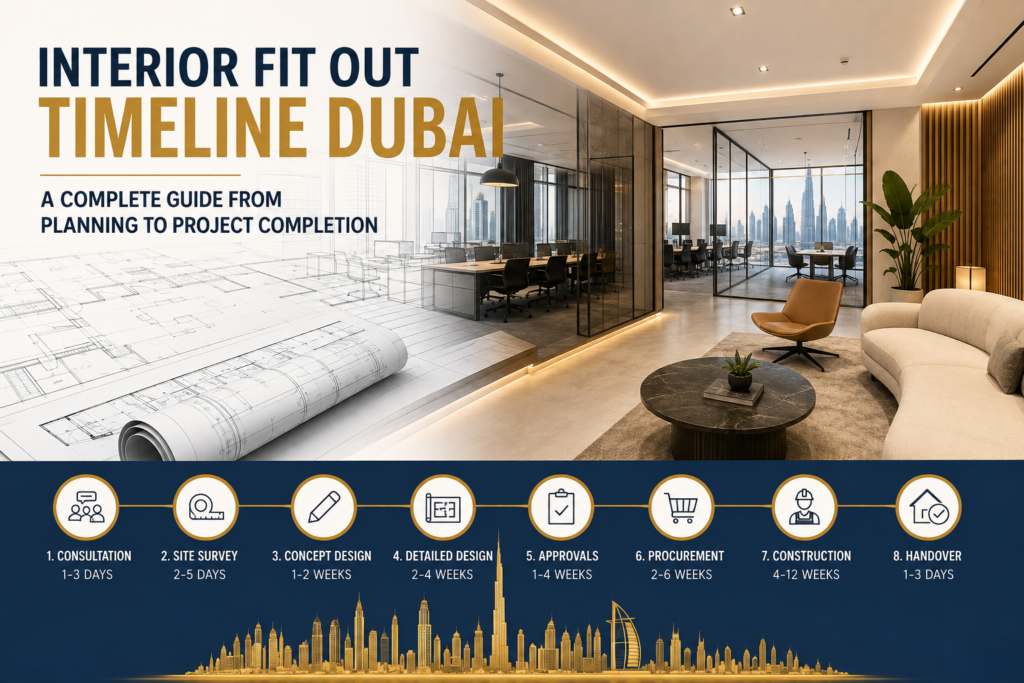
Whether it’s an office, retail outlet, restaurant, villa, apartment, or commercial property, getting a real handle on the interior fit out timeline Dubai matters a lot more than people realize before starting a project. Every fit-out moves through several distinct phases, planning, design, approvals, construction, installation, and final handover, and knowing roughly how long each stage takes helps avoid a lot of unnecessary stress along the way.
At Naam Creation, we’ve worked across enough residential and commercial projects in Dubai to know that transparency around timing matters just as much as the finished result. Here’s a real walkthrough of what the interior fit out timeline Dubai actually looks like, stage by stage.
What an interior fit-out actually involves
It’s the process of turning an empty or existing space into something fully functional and genuinely well-designed. That covers space planning, interior design, civil work, flooring, ceiling installation, electrical work, HVAC systems, plumbing, joinery, glass partitions, painting, furniture installation, lighting, and final finishing. The overall interior fit out timeline Dubai really depends on project size, design complexity, approval requirements, material availability, and how much customization is involved.
Why understanding the timeline actually matters
Knowing what to expect helps with a lot more than just patience. It lets clients plan business openings properly, schedule office relocations around the actual work, coordinate furniture deliveries so nothing sits waiting, manage budgets realistically, avoid unexpected delays, keep communication clear throughout, track real milestones, and generally ensure the project actually finishes when it’s supposed to. A professional contractor should be handing over a detailed schedule from day one, not vague estimates.
How the process actually unfolds, step by step
It starts with an initial consultation, usually taking one to three days, where the client’s actual vision gets discussed, business requirements, design preferences, function, budget, timeline expectations, and an initial site inspection. This meeting really sets the objectives before anything else moves forward.
A site survey and measurement phase follows, generally two to five days, where experts actually evaluate the existing structure, ceiling heights, MEP services, floor levels, access points, and structural condition. These measurements become the real foundation everything else gets designed around.
Concept design comes next, usually taking one to two weeks. This is really where things get exciting, mood boards, space planning, material concepts, color palettes, furniture layouts, lighting ideas, and initial 3D visuals all come together for the client to review before anything’s locked in.
Detailed design development follows once the concept’s approved, typically two to four weeks. This covers floor plans, ceiling layouts, electrical layouts, HVAC plans, plumbing drawings, joinery details, furniture plans, elevations, sections, and material specifications, all needed to keep construction accurate down the line.
Authority approvals as part of the timeline
Dubai projects often need sign-off from relevant authorities depending on the building and project type, Dubai Municipality, Civil Defense, building management, free zone authorities, DEWA, Trakhees, TECOM, or DDA. Approval timelines generally run between one and four weeks depending on what the project actually requires.
Material selection and how it affects timing
Choosing materials early genuinely affects both quality and how fast the project moves. Flooring, marble, tiles, paint, wallpaper, ceiling finishes, glass, lighting, furniture, doors, and joinery finishes all need deciding early enough to avoid procurement delays later.
Procurement and manufacturing
This stage usually takes two to six weeks, since custom furniture and joinery need real manufacturing time before installation. That covers ordering materials, factory production, quality checks, logistics, and delivery scheduling. Naam Creation coordinates this carefully to keep the interior fit out timeline Dubai actually on track rather than letting procurement quietly stall the whole project.
Preparing the site before construction actually starts
Teams protect existing finishes, remove anything unwanted, handle waste disposal, set up temporary utilities, and put proper site safety measures in place. Getting this right up front makes the actual construction phase go a lot smoother.
The construction phase itself
This is genuinely the longest stretch of the project. Civil work covers wall construction, block work, gypsum partitions, and any needed demolition. Flooring installation might involve marble, porcelain, vinyl, carpet, or hardwood depending on the space. Ceiling installation covers gypsum, decorative, or acoustic ceilings. Electrical installation handles wiring, lighting, power outlets, and smart systems. HVAC installation covers air conditioning, ventilation, and ductwork. And plumbing covers water supply, drainage, and bathroom fixtures. Each piece follows an organized schedule specifically to keep delays to a minimum.
Joinery installation
Custom joinery covers reception counters, kitchen cabinets, wardrobes, display shelves, office storage, and wall panels, all built with real precision so installation actually goes smoothly once everything arrives on site.
Painting and decorative finishing
Once the main construction wraps up, finishing work takes over, wall painting, decorative textures, wallpaper, feature walls, wood polishing, and metal finishes. This stage really defines how the finished space actually looks and feels.
Furniture installation
Office desks, workstations, conference tables, reception furniture, sofas, chairs, and storage systems all get placed according to the approved layout, not just wherever there’s room.
Lighting installation
Lighting genuinely shapes the whole atmosphere of a space. LED lighting, pendant lights, cove lighting, spotlights, decorative fixtures, and smart lighting systems all get installed to enhance both the look and the actual function of the space.
Final inspection before handover
Before anything’s considered complete, a proper quality inspection checks paint quality, flooring alignment, electrical systems, HVAC performance, plumbing, joinery, lighting, and overall safety compliance. Any minor issues get corrected right away rather than left for later.
Project handover
The final stage covers a client walkthrough, closing out the snag list, a proper clean, full documentation, warranty information, and maintenance guidance. The client walks away with a completed interior that’s genuinely ready to use immediately, not something still being finished behind the scenes.
How long different projects actually take
Timelines vary a lot depending on scope. An apartment fit-out generally runs 4 to 8 weeks. A villa renovation typically takes 8 to 16 weeks. Office fit-outs usually run 6 to 12 weeks. Retail shops tend to fall between 4 and 10 weeks. Restaurant fit-outs generally take 8 to 16 weeks. Healthcare facilities often run 10 to 20 weeks given the added compliance work. And hospitality projects, hotels especially, can take 12 to 24 weeks. Actual timelines really do depend on complexity and how many approvals a specific project needs.
What actually affects how long a project takes
A few factors consistently shape the interior fit out timeline Dubai, authority approvals, custom furniture production, imported materials, design revisions along the way, how quickly the client approves things, site accessibility, building regulations, overall project scope, weather for any external work, and general supply chain availability. Working with an experienced team genuinely minimizes most of these risks before they turn into real delays.
How to actually keep a fit-out on schedule
Finalize designs early rather than second-guessing partway through. Approve materials promptly instead of letting decisions sit. Avoid frequent design changes once construction’s underway. Choose a genuinely experienced contractor. Keep communication regular throughout. Schedule inspections ahead of time rather than last minute. Confirm procurement timelines early. And plan the budget realistically from the start. These habits genuinely prevent the kind of costly delays that catch a lot of first-time renovators off guard.
Why choose Naam Creation for this
Naam Creation delivers comprehensive fit-out services across Dubai with a real focus on quality, transparency, and actually finishing on time. That covers residential fit-outs, commercial interiors, office renovations, retail fit-outs, restaurant interiors, villa renovations, turnkey solutions, custom joinery, interior design, and full project management. Every phase of the interior fit out timeline Dubai gets handled by people who actually know the process, keeping things moving efficiently without cutting corners on craftsmanship.
Final thoughts
A successful interior fit out timeline Dubai really comes down to careful planning, real project management, quality materials, and skilled execution. From concept design and authority approvals through construction, finishing, and final handover, every stage genuinely matters to the end result.
Partnering with Naam Creation means working with a team that actually delivers on time and within budget, whether the project’s a home, office, retail store, restaurant, or commercial property. The goal’s a smooth, stress-free process from that first planning conversation through to actually walking into the finished space.
Frequently Asked Questions (FAQ)
What’s the average interior fit out timeline Dubai?
Most projects take somewhere between 4 and 16 weeks, depending on size, complexity, approvals, and customization.
What actually causes delays in a fit-out timeline?
Authority approvals, material shortages, design changes mid-project, custom joinery production time, and unexpected site conditions.
Can Naam Creation manage the entire fit-out process?
Yes, design, approvals, procurement, construction, project management, and final handover, all handled end to end.
Are authority approvals actually built into the timeline?
Yes, necessary approvals typically get factored into the project schedule to keep everything compliant.
How can delays actually be reduced in a fit-out project?
Finalize the design early, approve materials promptly, keep communication clear, and work with an experienced contractor like Naam Creation.
Does the timeline actually differ between residential and commercial projects?
Yes, residential projects generally move faster, while commercial spaces like offices, retail stores, restaurants, and healthcare facilities often need more approvals and specialized installation work.
Why does understanding the interior fit out timeline Dubai actually matter?
A clear timeline helps plan budgets, coordinate business operations, manage expectations properly, and keep the project moving efficiently with minimal disruption.


