
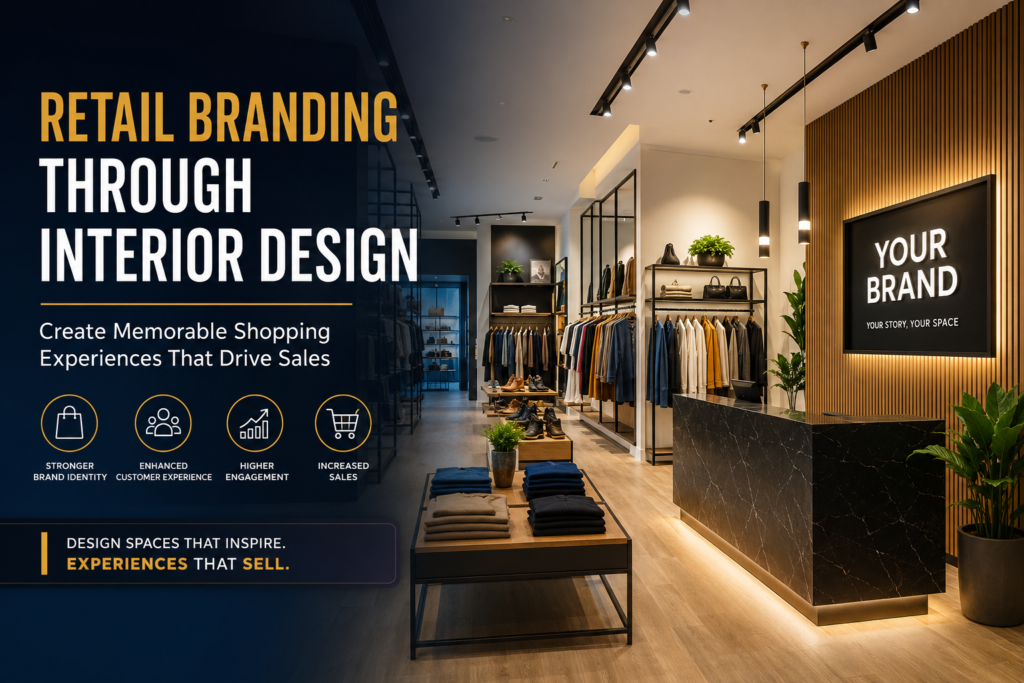
Customers walk into a store expecting more than shelves stacked with product these days, they want something that actually feels like the brand, not just a room selling its stuff. That’s really the whole idea behind retail branding through interior design, using the physical space itself to pull customers in emotionally, not just visually.
Fashion boutique, electronics showroom, luxury retail store, supermarket, jewelry outlet, or lifestyle brand, investing in retail branding through interior design genuinely helps a business stand out in a market where everyone’s fighting for the same attention. At Naam Creation, this is really the focus, blending aesthetics, function, customer psychology, and actual brand identity into retail spaces that deliver a genuinely memorable shopping experience.
What retail branding through interior design actually means
It’s the process of weaving a company’s visual identity, brand values, and customer experience into the physical layout of a retail space. It’s not just decorating a shop, it’s building an environment that genuinely tells the brand’s story through:
- Store layout and how customers move through it
- Lighting design
- Color psychology
- Material selection
- Product displays
- Digital elements
- Signage
- Furniture
- Customer flow
- Interactive touches
Every choice reinforces the brand and, ideally, encourages people to actually stay longer and spend more while they’re there.
Why this actually matters so much
Customers form an opinion within seconds of walking through the door. A well-designed branded space can genuinely increase trust, improve the whole shopping experience, encourage longer visits, boost product visibility, drive more impulse purchases, strengthen how memorable the brand feels, create spaces people photograph and share, build real loyalty, and set a business apart from everyone else on the block. That’s exactly why the bigger retailers around the world invest so heavily in retail branding through interior design rather than treating it as an afterthought.
How interior design actually shapes buying decisions
The physical environment genuinely affects how people shop, and research keeps confirming that people spend more when they feel comfortable and emotionally connected to a space. This plays out a few ways:
A strong first impression matters immediately, storefront design and how the entrance is laid out communicate quality and professionalism before someone even steps inside, and a welcoming entrance genuinely pulls in more foot traffic.
Emotional connection comes through color, texture, lighting, and overall branding. Luxury brands lean into premium finishes. Lifestyle brands go for something relaxed and inviting. Tech stores tend to keep things minimal and forward-looking. Each approach fits the story that particular brand’s actually trying to tell.
Product visibility improves with the right layout, guiding customers naturally through the store so products get discovered rather than hunted for, which quietly increases sales without anyone feeling pushed into buying.
And the customer journey overall gets a lot smoother with good design, reducing confusion and letting people navigate departments easily while naturally stumbling onto other things along the way.
The core elements that actually make this work
Brand colors matter more than people think, and consistency’s really the key here, showing up across walls, furniture, signage, displays, graphics, lighting accents, and even the POS counter. That consistency’s what builds real brand recall over time.
Lighting design genuinely changes how customers perceive a space. Ambient lighting, accent lighting, display lighting, decorative lighting, and feature lighting all work together to make products more appealing while keeping the space comfortable to actually spend time in.
Store layout shapes how people move and explore. Grid layouts, free-flow layouts, boutique-style layouts, loop layouts, or a mix of approaches, the right choice improves movement and gets more products in front of customers naturally.
Custom fixtures reinforce identity while genuinely improving function. Custom shelving, display units, counters, and branded furniture help a store stand apart from competitors selling the exact same products elsewhere.
Branded signage ties it all together, logo placement, directional signage, promotional graphics, digital displays, wall branding, and window graphics all improve navigation while quietly reinforcing the brand message throughout the space.
Materials and finishes communicate quality almost instantly. Wood, stone, glass, metal, acrylic, concrete, and premium laminates each say something different, and the material choice really should reflect the brand’s actual personality, not just what’s trending.
What this actually delivers for a business
Higher customer engagement shows up first, people interact more with visually thoughtful spaces, and longer visits tend to translate into higher sales. Increased sales follow from smart displays that naturally guide shoppers toward featured products and encourage impulse buys without pressure. Brand recognition strengthens as consistent design across every touchpoint builds memory, which brings people back. A real competitive edge emerges too, since a unique shopping environment turns a store into an actual destination rather than one option among many. And customer loyalty grows, since people remember a positive shopping experience and tend to recommend it to friends and family without needing to be asked.
How this plays out across different retail industries
Fashion retail benefits from elegant fitting rooms, statement lighting, luxury displays, genuinely photogenic interiors, and premium materials throughout.
Electronics stores lean into minimalist interiors, interactive product displays, digital screens, smart lighting, and clean, uncluttered layouts.
Beauty retail needs soft lighting, dedicated product testing zones, mirrors, premium finishes, and interactive counters that let customers actually try things.
Jewelry stores rely on secure display cases, elegant materials, focused lighting, comfortable seating, and decor that feels genuinely sophisticated.
Supermarkets focus more on practical navigation, clear department identification, wide aisles, promotional displays, and checkout zones that actually move efficiently.
Where retail design is actually headed in 2026
Sustainable design keeps growing, eco-friendly materials genuinely appeal to environmentally conscious shoppers now. Digital integration’s expanding too, interactive screens, digital signage, smart mirrors, self-checkout systems, and augmented reality experiences all showing up more often. Experiential retail’s a real shift too, customers increasingly want an experience over a transaction, interactive zones, photo opportunities, product demos, and community spaces built into the store itself. Flexible layouts are gaining ground as well, modular furniture that lets retailers update displays quickly for promotions or seasonal shifts. And biophilic design’s showing up more, indoor plants, wood textures, natural light, green walls, all creating a genuinely more relaxing space to shop in.
Why choose Naam Creation for this kind of work
Every retail space represents the brand behind it, and Naam Creation team delivers custom solutions that combine creativity, branding, and real function. That covers retail interior design, brand identity integration, space planning, store layout design, custom furniture, visual merchandising, lighting design, turnkey interior solutions, retail renovation, and full project management. From the first concept through final handover, the goal’s a space that genuinely inspires customers and improves how the business actually performs.
How the process actually works
It starts with brand discovery, understanding the business goals, customers, products, and identity behind the brand. Concept development follows, mood boards, layouts, and branding direction taking shape. 3D visualization lets clients preview the full retail environment before construction begins. Material selection matches finishes to the brand’s personality and budget. Execution’s managed by a real project team through every construction and installation phase. And final handover delivers a ready-to-open, fully branded retail space.
The industries this kind of work actually serves
Fashion stores, luxury boutiques, shopping malls, electronics showrooms, restaurants, cafes, jewelry stores, supermarkets, cosmetic stores, lifestyle brands, sports retail, home decor stores, furniture showrooms, healthcare retail, and franchise chains, Naam Creation covers a genuinely wide range.
Why this is genuinely a long-term investment, not just an expense
A lot of retailers still treat interior design as a cost rather than a strategy, but retail branding through interior design pays off well beyond the initial build. That means higher customer retention, a real increase in average transaction value, stronger brand perception, better employee productivity, improved operational efficiency, more organic social media visibility, better customer satisfaction, and a genuinely higher return on investment overall. A well-designed retail space keeps generating value long after the project’s technically finished.
Final thoughts
In a retail market that’s become genuinely experience-driven, products alone don’t do the job anymore. Retail branding through interior design turns an ordinary store into somewhere people actually remember, with every design decision reinforcing the brand and improving the customer’s whole journey through the space. Layout, lighting, materials, signage, custom fixtures, all of it contributes to trust, engagement, and ultimately sales.
At Naam Creation, creativity, function, and real branding expertise come together to deliver retail interiors that genuinely leave an impression. New retail launch or an existing store overdue for an update, the goal’s the same, spaces that strengthen the brand and support real, long-term business growth.
Frequently Asked Questions (FAQ)
What is retail branding through interior design?
Weaving a brand’s identity into the physical design of a retail store through layout, color, lighting, furniture, signage, and the overall customer experience.
How does this actually increase sales?
A well-designed space improves engagement, boosts product visibility, encourages longer visits, strengthens brand perception, and ultimately drives more purchases.
Which businesses actually benefit from this?
Fashion boutiques, supermarkets, electronics stores, beauty retailers, jewelry shops, cafes, restaurants, furniture showrooms, pharmacies, and lifestyle brands all see real benefit.
Why choose Naam Creation for this kind of work?
End-to-end retail interior solutions, branding integration, space planning, custom furniture, lighting design, visual merchandising, and full turnkey execution built to create real impact.
How long does a retail branding project usually take?
Depends on size and complexity, smaller spaces might take a few weeks, larger or heavily customized projects can run several months from approval to completion.
How often should a store actually refresh its interior branding?
Generally every 5 to 7 years, or sooner if there’s a rebrand, expansion, or a real shift in what customers expect from the space.


